
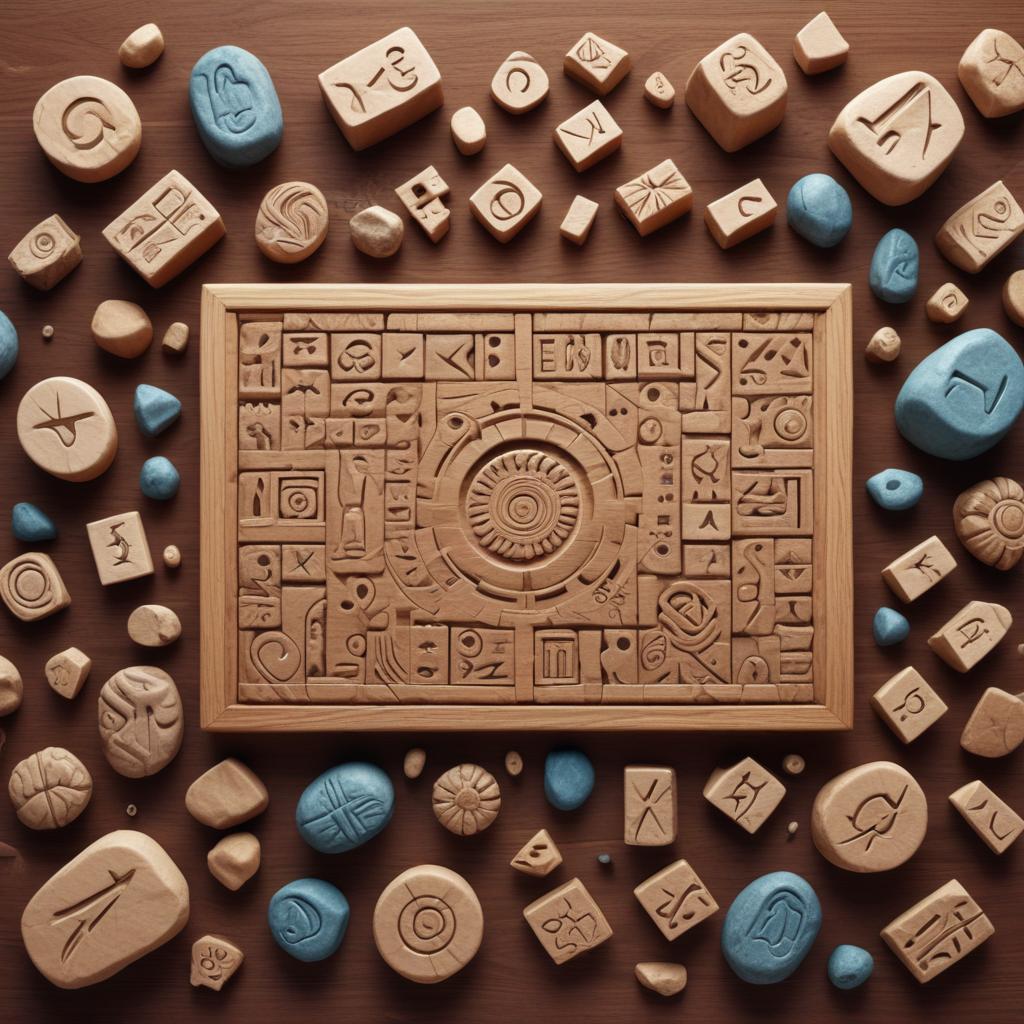
Introduction to Symbols and Combinations
Symbols are visual or conceptual representations that stand for ideas, objects, or relationships. They serve as a fundamental language in human communication, mathematics, and design. Combinations refer to the way these symbols are grouped or arranged to convey more complex meanings or functions. Understanding the basics of symbols and combinations is essential because they form the building blocks of how we interact with and interpret the world around us.
In communication, symbols such as letters, numbers, and icons enable us to share messages effectively. For example, alphabets composed of symbols create words, which combine to convey detailed information. Symbols transcend language barriers, allowing for universal understanding through signs and gestures. Combinations of these symbols create a system of meaning that is greater than the sum of individual symbols, making complex ideas easier to express and understand.
Mathematics relies heavily on symbols and their combinations to represent abstract concepts, operations, and relationships. Symbols like +, -, ×, and ÷ are universally recognized and combined in equations to solve problems. This symbolic language provides a concise and precise way to communicate numerical and logical information, enabling mathematicians and scientists to explore theories, solve puzzles, and apply logic in practical ways.
In design, symbols and their combinations are crucial for creating visual language and identity. Logos, icons, and typography use symbols to evoke emotions, convey brand messages, and guide user experiences. The combination of various design elements allows creators to produce meaningful and aesthetically pleasing compositions that communicate without words. This use of symbols enhances recognition and memorability, making understanding symbols vital for successful design.
Overall, symbols and combinations form the core of many systems that underpin human knowledge and interaction. From everyday communication to specialized fields like mathematics and design, their importance cannot be overstated. Recognizing and mastering the basics of symbols and combinations enables us to navigate, interpret, and influence the world more effectively.
Definition and Types of Symbols
Symbols are fundamental elements used to represent ideas, objects, or relationships in a concise and often universally understandable way. They serve as a bridge to convey complex meanings through simple forms, making communication more effective. The definition of symbols encompasses any mark, sign, or figure that stands for something else by association, resemblance, or convention. Understanding different types of symbols is essential to grasp their varied applications across multiple fields.
Visual symbols are among the most recognizable and include icons, logos, and images that convey messages without the need for words. These symbols often rely on shapes, colors, and graphics to transmit meaning quickly and intuitively, such as traffic signs or religious symbols. They are prevalent in everyday life and visual communication.
Linguistic symbols, on the other hand, are the building blocks of language, comprising letters, words, and characters that represent sounds or concepts. These symbols follow specific grammatical rules and structures that form languages, allowing for detailed and nuanced human communication.
Mathematical symbols form a distinct category used to represent numbers, operations, relations, and other abstract concepts in mathematics. These symbols, like +, −, =, and ∑, provide a universal language that simplifies complex mathematical ideas and facilitates logical reasoning and problem-solving.
By understanding these various types of symbols—visual, linguistic, and mathematical—we appreciate how symbols function as powerful tools in different contexts to encode and transmit meaning efficiently.
The Role of Combinations in Symbolism
Combinations play a crucial role in symbolism by generating new layers of meaning that go beyond individual symbols. When symbols interact, their combined presence creates an interplay that can convey complex ideas, emotions, or cultural messages that a single symbol alone may not fully express. This dynamic function of combinations is fundamental in various domains such as language, logic, and culture.
In language, combinations of symbols — such as letters forming words or words forming sentences — provide a structure where meanings evolve through context and arrangement. The meaning of a word can shift significantly depending on how symbols are combined, illustrating how symbolism is not static but fluid and adaptive.
In logic, combinations of symbols operate as formal systems that establish relationships and rules, enabling the deduction of new truths. Logical operators combine simpler symbolic statements into more complex propositions, emphasizing that the interaction between symbols facilitates reasoning and understanding.
On a cultural level, symbolic combinations reflect shared values, identities, and traditions. For instance, the blending of symbols in rituals, art, or national emblems often carries rich connotations and meanings that are collectively recognized. This interaction amplifies the significance of symbols by embedding them within a broader context, allowing combinations to shape collective meaning and cultural narratives.
Applications of Symbols and Combinations
Symbols and their combinations hold a significant place across various fields, demonstrating their vast range of applications and importance in both theoretical and practical contexts. One of the most prominent areas utilizing symbols is mathematics. In mathematics, symbols serve as the basic language for representing numbers, operations, and abstract concepts. Combinations of symbols allow mathematicians to express complex relationships, formulas, and equations in a concise and universally understood manner. This clear symbolic language enables problem-solving and communication of ideas across different cultures and languages.
In the realm of semiotics, the study of signs and symbols as elements of communicative behavior, symbols are fundamental to understanding how meaning is constructed and conveyed. Semiotics investigates how different combinations of symbols—whether linguistic, visual, or auditory—create complex systems of meaning. This field explores how cultural and societal contexts influence the interpretation and usage of symbols, highlighting their dynamic nature and the power they have in shaping human perception and communication.
Computer science is another field where symbols and their combinations are extensively applied. At its core, computing relies on symbolic representations to encode data and instructions. Programming languages, for instance, use specific symbolic syntax and combinations to tell computers what actions to perform. Binary code, composed of combinations of 0s and 1s, underpins all digital computing, making symbols critical to the operation of modern technology. Furthermore, symbolic logic is used in algorithms and artificial intelligence to perform reasoning and decision-making tasks.
Art, too, employs symbols and combinations extensively, albeit in a more interpretive and subjective manner. Artists utilize symbols to represent ideas, emotions, and narratives, often blending them in intricate combinations to enrich their works’ meanings. Symbolism in art can be deeply personal, cultural, or universal, allowing artists to communicate messages that transcend literal representation. From ancient cave paintings to contemporary installations, the usage of symbols continues to be a powerful tool for artistic expression and storytelling.
In conclusion, the applications of symbols and combinations are diverse and far-reaching. Whether facilitating mathematical abstraction, decoding cultural meanings, driving technological innovation, or enriching artistic expression, symbols are indispensable. Their usage across these varied fields highlights their fundamental role in human understanding and communication, making them an essential aspect of countless disciplines worldwide.
Mathematical Symbols and Their Combinations
In the field of mathematics, symbols are fundamental tools used to represent numbers, operations, and relationships in a concise and standardized way. Common mathematical symbols include plus (+) for addition, minus (−) for subtraction, multiplication (× or *), and division (÷ or /). Other important symbols include the equal sign (=), which shows equality, and inequality symbols like less than (<) and greater than (>).
These symbols form the building blocks of mathematical notation, allowing complex ideas to be communicated efficiently. When combined, these symbols create expressions and equations that represent mathematical concepts and problems. For example, the combination «3 + 5» is a simple expression representing the addition of two numbers. When we add the equal sign and a result, as in «3 + 5 = 8,» it becomes an equation stating the equality between the expression and its value.
Formulas, another key element in mathematics, are typically composed of various symbols and variables arranged following specific rules. They allow us to express general relationships, such as the area of a circle (A = πr²), combining different mathematical symbols to provide valuable information in a compact form. Understanding how symbols work together in notation is crucial for reading, writing, and solving mathematical problems effectively.
Overall, mastering mathematical symbols and their combinations is essential in mathematics education because it helps students interpret and construct formulas, work with different operations, and communicate mathematical ideas clearly and accurately.
Symbols in Language and Communication
Symbols form the foundation of language and communication, acting as essential building blocks in the structure of communication systems. In language, symbols represent sounds, ideas, or objects, and when combined, they follow specific rules of syntax to convey meaning effectively. This combination of symbols enables the creation of complex messages that go beyond simple representation, allowing nuanced thought and detailed expression.
Writing systems exemplify the use of symbols and their combinations, where letters, characters, or icons represent phonetic sounds or concepts. These symbols must be arranged systematically according to grammar and syntax rules to ensure clarity and comprehension. Without such organization, communication would be chaotic, and the transmission of ideas would become inefficient and prone to misunderstanding.
In effective communication, the interplay between symbols and syntax is crucial. Symbols on their own may be ambiguous, but their combination within a structured system enables the encoding and decoding of precise information. This system not only facilitates ordinary verbal exchanges but also underpins more complex forms of communication such as literature, scientific notation, and digital language.
Ultimately, symbols and their combinations are indispensable in shaping how humans express thoughts, share knowledge, and interact socially. Understanding this dynamic highlights the profound role of language as a symbolic system that organizes ideas through a structured methodology of communication.
Interpreting Symbols and Their Combinations
Interpreting symbols and their combinations requires a keen understanding of the cultural and contextual frameworks in which they appear. Symbols rarely hold a fixed meaning; instead, their significance can shift dramatically based on the environment, tradition, and collective experience of a community. To decode these visual or conceptual markers, one must employ various techniques that take into account the layers of meaning embedded within.
One of the foundational methods for interpretation is contextual analysis. This involves studying the symbols within the specific setting they are used—be it a cultural ceremony, a piece of art, or a religious text. Understanding the historical and social backdrop helps to reveal why certain symbols are combined and what messages they collectively convey. For instance, a symbol that denotes power in one culture may represent protection in another, and when combined with other symbols, the resulting meaning can become complex or even contradictory.
Comparative analysis is another effective approach. By comparing symbols and their combinations across different cultures or time periods, interpreters can discern patterns and divergences in meaning. This method highlights both universal symbolic themes and unique cultural expressions. For example, the combination of a circle and cross may signify the sun in one tradition and the earth or spirituality in another, showing how combinations alter perception.
Symbolic interpretation also benefits from interdisciplinary methods, drawing on anthropology, semiotics, psychology, and linguistics. Anthropologists contribute insights into the societal uses and evolutions of symbols, while semioticians analyze the signs and signifiers to uncover deeper communication processes. Psychological perspectives can reveal how symbols resonate individually and collectively, influencing emotions and behavior, thus enriching the interpretation of symbol combinations within varied contexts.
Furthermore, it is crucial to recognize that symbols often hold layered meanings, where combinations create new or amplified significance rather than simply adding individual meanings together. This dynamic is especially evident in religious and mythological symbolism, where the interplay of symbols can suggest complex philosophical or spiritual concepts. A mindful approach to interpretation acknowledges this multiplicity and remains open to evolving understandings.
In summary, interpreting symbols and their combinations is a nuanced process that calls for attention to cultural specificity, contextual depth, and interdisciplinary insight. Through contextual analysis, comparative study, and an appreciation for layered meanings, one can unlock the rich significance behind symbols and the intricate combinations they form, revealing the powerful messages embedded within diverse traditions and expressions.
Cultural Variations in Symbol Meaning
Symbols hold powerful meanings, yet their interpretations are deeply influenced by cultural contexts. A symbol that conveys positivity in one culture might evoke negativity in another. For example, the color white is often associated with purity and peace in Western cultures, while in some Eastern cultures it represents mourning and death. This highlights the importance of understanding the cultural lens through which symbols are viewed.
Moreover, combinations of symbols can vary widely in their meaning depending on the culture interpreting them. The arrangement, context, and even the sequence of symbols can alter their message. A gesture or icon that is respectful in one culture may be offensive in another when paired with certain symbols. This variability underscores how meaning is not inherent in symbols alone but emerges through their use within specific cultural frameworks.
Understanding the relationship between culture, symbols, and meaning is crucial in today’s globalized world. Effective communication requires sensitivity to these cultural differences, especially when using symbols in international contexts. Thus, context is key — both the cultural background and the combination of symbols must be carefully considered to avoid misinterpretation and to convey the intended message accurately.
Analyzing Symbol Combinations in Art and Media
In art and media, symbolism is a powerful tool used to communicate layered meanings and evoke complex emotions. When symbols are combined, their meanings often interact in ways that create richer, more nuanced interpretations than any single symbol could achieve alone. Artists and creators strategically use these combinations to convey stories, themes, and emotions that resonate deeply with audiences.
For example, in visual art, the juxtaposition of a dove with an olive branch traditionally signifies peace and hope. However, when coupled with a dark stormy background, this combination may suggest the fragility of peace amidst turmoil, adding emotional depth and prompting viewers to reflect on broader social or political issues. Similarly, in media such as film or literature, the use of intertwined symbols like chains paired with a blooming flower can represent the struggle for freedom and renewal, inviting varied interpretations depending on context.
Understanding these combinations enriches the experience of art and media by engaging the audience in interpretation and emotional response. Symbolism in combination helps transcend literal storytelling, unlocking subconscious connections and encouraging viewers or readers to explore personal and cultural meanings. Ultimately, the skillful use of symbol combinations elevates artistic expression, making it a vital mechanism for communicating complex messages through subtle yet impactful visual or narrative cues.

I’ve been fascinated by the world of online casinos and slot games ever since I discovered how strategy and luck intertwine. I love exploring new bonuses, sharing tips on responsible gaming, and diving deep into the mechanics behind each game. My goal is to help players enjoy the excitement while staying informed and safe.