

Online casino entertainment blends bright graphics, rapid payouts, and tempting bonuses, but the excitement can blur the line between fun and excess. Players who treat slots and table games as a hobby rather than a source of income tend to stay in control longer. Understanding how each element of a digital casino works helps you build habits that protect both your wallet and your wellbeing. This guide gathers proven tactics, platform tools, and practical mind‑sets that keep the experience enjoyable without slipping into risky territory. By applying these strategies you can enjoy the thrill of spins while preserving your financial health.
Knowing the odds and volatility of online slots
Every slot machine is built around a specific return‑to‑player (RTP) percentage, typically ranging from 92 % to 98 %. The higher the RTP, the more money the game returns to players over thousands of spins, though short‑term results still vary wildly. Volatility, or variance, describes how often a game pays out and the size of those payouts; low‑volatility titles give frequent small wins, while high‑volatility games offer rare but larger hits. By checking the RTP and volatility before you start, you can match a game’s profile to your risk tolerance and avoid chasing unlikely jackpots. Most reputable operators list these figures in the game information panel, so a quick glance can inform a smarter betting decision.
Understanding the mathematics behind a slot also reduces the illusion of “hot” or “cold” streaks that many players chase. A series of losses does not increase the probability of a win on the next spin, because each spin is independent and governed by a random number generator. When you accept this reality, you are less likely to increase your bet size in an attempt to recover losses, a behavior known as “tilting.” Keeping a realistic view of odds helps you set appropriate expectations and stay within the limits you have defined for yourself.
Setting realistic bankroll and session limits
A bankroll is the amount of money you allocate exclusively for gambling, separate from everyday expenses and savings. Experts recommend that this sum should never exceed 5 % of your monthly disposable income, ensuring that a losing streak does not affect essential bills. Once you have defined your bankroll, break it down into smaller session limits, such as a maximum spend per hour or per day. For example, a player with a €200 bankroll might decide to spend no more than €20 in a single session, preserving the remainder for future play.
Time limits work hand in hand with financial caps, because prolonged exposure increases the chance of impulsive decisions. Setting a timer on your device or using the casino’s built‑in session clock can remind you to step away after a predetermined period, often 30 to 60 minutes. When you reach either your monetary or temporal boundary, stop playing regardless of whether you are ahead or behind. This disciplined approach creates a clear boundary that protects both your budget and your mental stamina.
Leveraging casino responsible‑play features
Modern online casinos embed a suite of responsible‑play tools that let you customize limits in real time. Deposit caps let you set a maximum amount you can add to your account each week, while loss limits automatically suspend betting once you have lost a predefined sum. Some platforms also offer wager limits that restrict the total amount you can bet on a single game or across all games during a session. Activating these controls is usually a few clicks in the account settings, and many operators allow you to adjust them without contacting support.
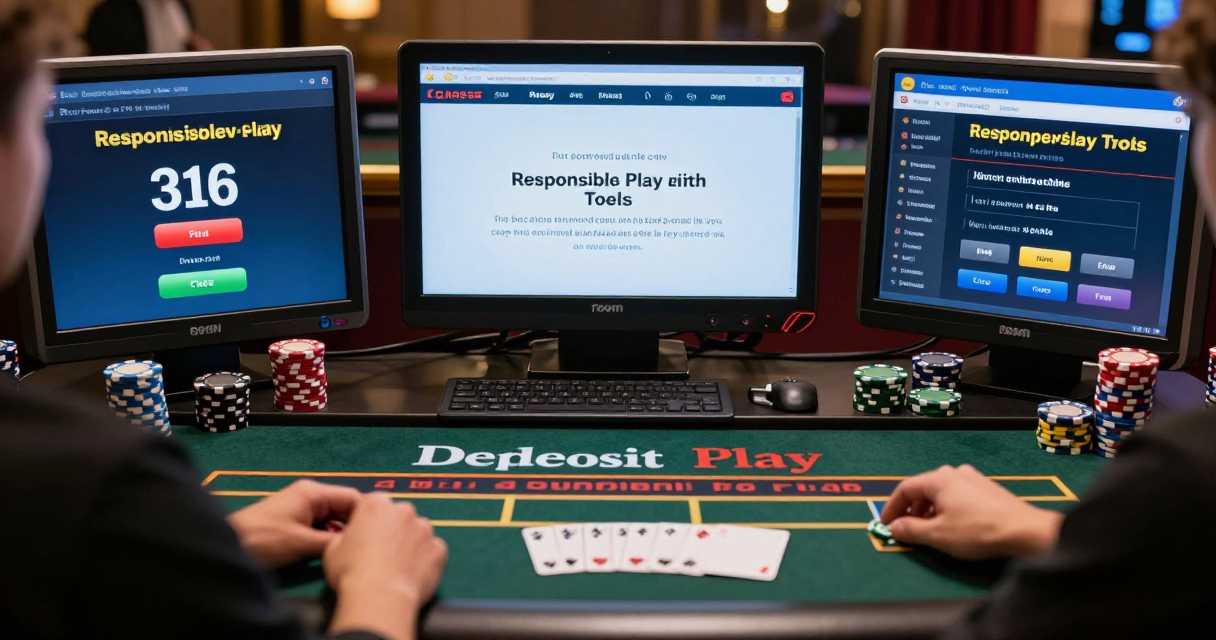
Self‑exclusion programs go a step further by blocking access to your account for a set period, ranging from 24 hours to several years. During self‑exclusion, you cannot log in, deposit, or withdraw funds, and the casino typically removes all promotional offers from your profile. If you anticipate a vulnerable moment, such as a holiday or a stressful life event, pre‑emptively enrolling in a temporary self‑exclusion can act as a safety net. Remember to keep the self‑exclusion confirmation email in a safe place; it serves as proof should you need to dispute any unauthorized activity.
Handling welcome bonuses and free spins responsibly
Welcome bonuses and free‑spin offers are attractive ways to extend your playing time, but they can also mask how much you are really spending. Most bonuses come with wagering requirements, meaning you must bet a multiple of the bonus amount before you can withdraw any winnings. For instance, a €100 bonus with a 30x wagering condition requires €3 000 in bets, which can quickly exceed your intended bankroll if you are not careful. Before you accept a bonus, read the terms thoroughly and calculate how many spins or bets it will realistically cost to meet the requirements.
Free spins often have a maximum cashout limit, such as €20, regardless of how much you win on those spins. If you exceed that cap, the excess is forfeited, turning a potentially large win into a modest payout. By treating bonuses as extra playtime rather than guaranteed profit, you can keep your betting discipline intact. Set a separate limit for bonus‑derived funds, and once you have reached that limit, stop playing even if the original bonus terms have not been fully satisfied.
Spotting behavioral warning signs early
Early detection of problem gambling habits can prevent more serious issues later on. Common warning signs include playing longer than planned, chasing losses by increasing bet sizes, and feeling anxious or irritable when you are not able to gamble. Another red flag is neglecting personal responsibilities, such as work or family commitments, in favor of online casino sessions. If you notice that you are checking your account balance multiple times a day or that you are using credit cards to fund deposits, these behaviors warrant immediate attention.

Keeping a gambling diary can help you track patterns that might otherwise go unnoticed. Record each session’s start time, duration, amount wagered, and emotional state before and after playing. Over a few weeks, trends emerge that reveal whether you are sticking to your limits or slipping into riskier habits. When the diary shows a consistent rise in losses or an increase in the frequency of sessions, it is a clear signal to pause and reassess your approach, possibly seeking external advice.
Getting external support and using self‑exclusion
If personal controls are not enough, professional help is widely available and often free of charge. Many countries maintain helplines staffed by trained counselors who specialize in gambling‑related issues; in the United Kingdom, for example, the National Gambling Helpline can be reached at 0808 8020 247. Online resources such as Gamblers Anonymous provide peer‑support forums where you can share experiences and coping strategies. These services respect confidentiality and can guide you through steps like financial counseling, therapy, or legal advice if needed.
In addition to self‑exclusion at individual casinos, national self‑exclusion schemes allow you to block access across all licensed operators in a jurisdiction. Enrolling in such a program typically requires filling out a short form and providing identification, after which your name is added to a central blacklist. While the process may feel drastic, it creates a powerful barrier that stops you from creating new accounts or depositing funds elsewhere. Combining personal limits, casino tools, and external support forms a comprehensive safety net that helps you keep the fun in online gambling without compromising your wellbeing.

I’ve been fascinated by the world of online casinos and slot games ever since I discovered how strategy and luck intertwine. I love exploring new bonuses, sharing tips on responsible gaming, and diving deep into the mechanics behind each game. My goal is to help players enjoy the excitement while staying informed and safe.